

Proper attic ventilation – how to do it?

The attic, like any other usable or non-usable space, requires adequate ventilation for constant air exchange. To provide it, a gravity or mechanical ventilation system is required. It is important to note that constant air exchange also means healthier living conditions and greater comfort. It is crucial that all rooms in the attic have ventilation ducts. It should also be mentioned that good air flow supports the removal of pollutants that arise during operation and allows fresh air to be supplied regardless of the season and weather conditions. After all, the more efficient the ventilation system, the better the air quality in the house and the better the durability of the whole structure.
When the outside temperature gets closer and closer to the room temperature, the ventilation intensity starts to decrease and, in the worst case, it completely stops working. This is detrimental as the air has to flow through all rooms and leave them through ventilation ducts. Interestingly, there is now a requirement that all rooms in the attic must have gravity ventilation ducts (which for a long time only applied to rooms that did not have windows).
If you wonder how to properly ventilate your attic, you must remember to make air supply openings and ensure their proper flow capacity. It should also be mentioned that the correct cross-section of the duct is at least 14x14 cm and the length is a minimum of 2 m. The inside of the duct must be straight and as smooth as possible with a suitable finish above the roof of the building.
Contents:
- Attic ventilation types
- Usable attic ventilation
- Non-usable attic ventilation
- Attic ventilation in the summer
- Attic ventilation in the winter
- Attic ventilation support systems
Attic ventilation types
Today, we can find reasonable solutions for almost everything. The same also applies to attic ventilation and we can list those that are used most frequently. These include:
- Natural ventilation (also known as gravity ventilation) is based on the use of gravity forces to result in proper air circulation. The difference in temperature outside and inside (the temperature inside the building must be significantly higher than outside – at least by 12ºC) improves the natural air flow and does not require any special systems of fans. All you need are efficient ventilation ducts (chimney pipes and ducts) and draughty or open windows. The commonly applied gravity ventilation in the attic is one of the most effective methods used.
- Mechanical ventilation is used instead of gravity ventilation, providing fresh and filtered air available in all rooms regardless of the season and weather. This has a major impact on the well-being and health of the residents. With it, you can also save a lot on heating as even up to 50%. It is worth getting mechanical ventilation with heat recovery. With this particular method of ventilation, no additional chimneys, vents or other ducts for air discharge are required. Mechanical ventilation also includes mechanical exhaust ventilation. In that case fans remove the used air so that fresh air can flow through the wall or window vents.
Usable attic ventilation
A usable attic is a place that requires complete or partial insulation of the roof slope. This makes the provision of adequate ventilation a must and is essential. Eventually, moisture starts to accumulate in the rooms to result in damage and much more. Depending on the roof covering, one or two ventilation slots are necessary. Poor ventilation may lead to moisture formation in the roof structure and thermal insulation as well as overheating of the house at high temperatures outside (especially in the summer or early autumn). The most convenient solution is certainly the installation of mechanical ventilation, although in addition to increased comfort of use, one should take into account higher costs of its implementation.
However, if you opt for a natural air exchange system, you need to ensure that windows are properly positioned to secure free air flow. It is recommended, among other things, to place windows opposite each other. Adequate quantity and arrangement of ventilation grilles and ducts in the attic is also crucial. Additional vents and micro-openings are also worthwhile.
Non-usable attic ventilation
The most frequent mistake when building a house is improper ventilation of the roof space. For instance, it includes the lack of air vents, which prevents the efficient air flow in an unusable room. The consequences of this neglect can be the formation of mould or fungi on the roof structure, reduced thermal insulation or water leakage. Ventilation gaps stand behind correct functioning of the roof and you will not have to worry about damage and additional costs. The unusable attic should be ventilated to prevent the accumulation of excess moisture in the room.
If the building has a gable roof, it is necessary to make openings in the gable walls. If, on the other hand, the roof has a slightly different shape, it is better to take advantage of ventilation chimneys. It is also advisable to prepare a gap (eg. ventilation grille) along the roof eaves so that the ventilation can work with full efficiency. However, it must be properly secured so that birds, insects as well as snow and rain don’t get there. A metal mesh will work well for this purpose. Attic ventilation ensures longer roof life, no condensation and mould as well as clean air throughout the building.


Attic ventilation in the summer
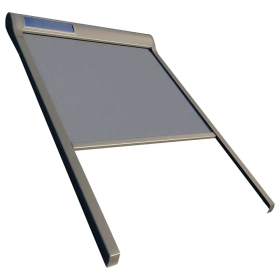
What is most important in the summer is to make sure that your attic is properly ventilated. Otherwise, rooms situated there will overheat excessively. It is therefore good option to equip windows with tight external roller shutters or awning blinds to cool the entire attic at night thanks to opening and uncovering windows. It is also important that the attic comes with air vents. These include, among others, floor, ceiling, window and wall air vents. In the summer, the intensity of gravity ventilation decreases significantly, so it is a positive thing to get mechanical ventilation.
To avoid excessive heat, remember to effectively cut off the access of the sun to the room and select the right windows. These windows should already have built-in air vents or micro-ventilation systems. If stale air has no way to get out, it will disturb proper ventilation and the attic will become stuffy. It is also worth investing in a standing fan to efficiently help cool the room. It is one of the cheaper solutions and there is such a large selection available on the market today that everyone can easily find something for themselves. However, if an ordinary fan is not enough, consider installing air conditioners (eg. portable). However, this type of equipment requires a constant supply of air, for example an open roof window. The more expensive solution, on the other hand, will be split and multi-split ventilation systems.
Attic ventilation in the winter
As we all know, the winter is inseparable from the heating season. Ventilation is particularly important during this period. If you have an efficient ventilation system, you do not need to worry about excess dirt or moisture, while vents bring you a constant supply of fresh air. Too much moisture will create favourable conditions for fungi and mould formation, which have negative impact on human health. Poor air quality also contributes to headache and dizziness, shortness of breath, nausea, fatigue and irritation of mucous membranes.
The simplest way of ventilation is probably airing, also in the winter time. It is best to ventilate the room several times a day, but only for a short period of time, so that all the heat does not escape from the room. However, this will not guarantee the right air quality. For this reason, it is good to get support in the form of additional attic ventilation, namely mechanical ventilation, which is assisted by electric fans or use the hybrid ventilation method (combining gravity and mechanical ventilation). It is also proper to install window vents. Then the influx of cold air will not be felt while proper circulation will be maintained.
Attic ventilation support systems
Air exchange in the house will certainly be improved by correct chimney draught equipped with a special cap, which has a great impact on the efficiency of heating devices and ventilation. It will also be supported by all kinds of fans, vents, ducts or ventilation grilles, which are very important component of the gravity ventilation system. One should also bear in mind the advantages of window vents or modern windows that already have them built-in. Ventilation ducts are also very effective in enabling proper air circulation. On the other hand, they can offer excellent support for gravity ventilation. These include exhaust and axial fans. They also often have various additional functions.
FAKRO SKYLIGHTS: COST SAVING AND ENERGY EFFICIENT!
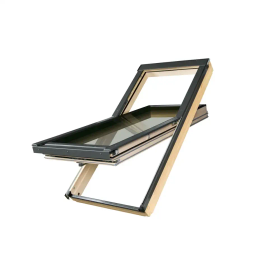
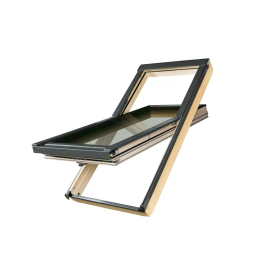
FAKRO FTT U8 THERMO skylight…essentially the window of the future ensures excellent thermal insulation performance and large energy savings.
ROOF WINDOWS: OUR GUIDE ON THE VARIOUS TYPES
Take a look at our "Types of Roof Windows" guide. Here we describe and explain in detail the various differences between roof windows.
